
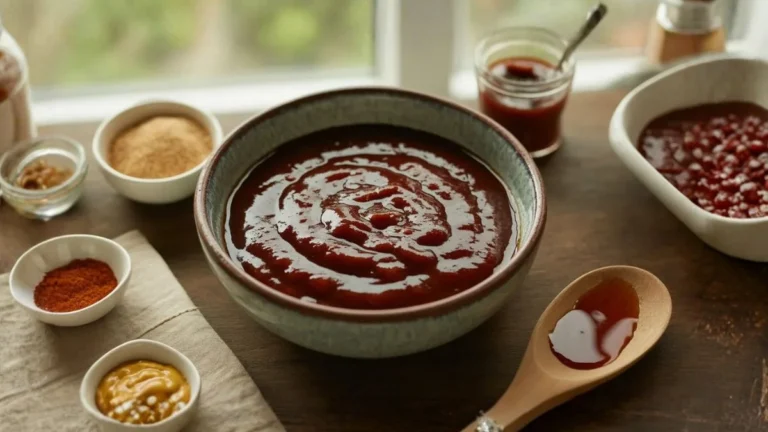

If you’ve ever tasted Blues Hog Tennessee Red BBQ Sauce at a barbecue competition or slathered it on competition-worthy ribs, you know it’s liquid gold.
This copycat Blues Hog BBQ sauce recipe brings that championship flavor right to your kitchen. Unlike thick, molasses-heavy sauces, this homemade Blues Hog BBQ sauce recipe delivers a thin, vinegar-forward profile with peppery heat and balanced sweetness that’s become legendary in the BBQ world.
Whether you’re mopping pulled pork, basting brisket, or finishing chicken thighs, this blue hog BBQ sauce recipe captures the essence of the original with simple pantry ingredients and one secret weapon that makes all the difference.
What Does It Taste Like?
This blues hog BBQ saus hits your palate with bright, tangy apple cider vinegar that cuts through rich, smoky meats beautifully.
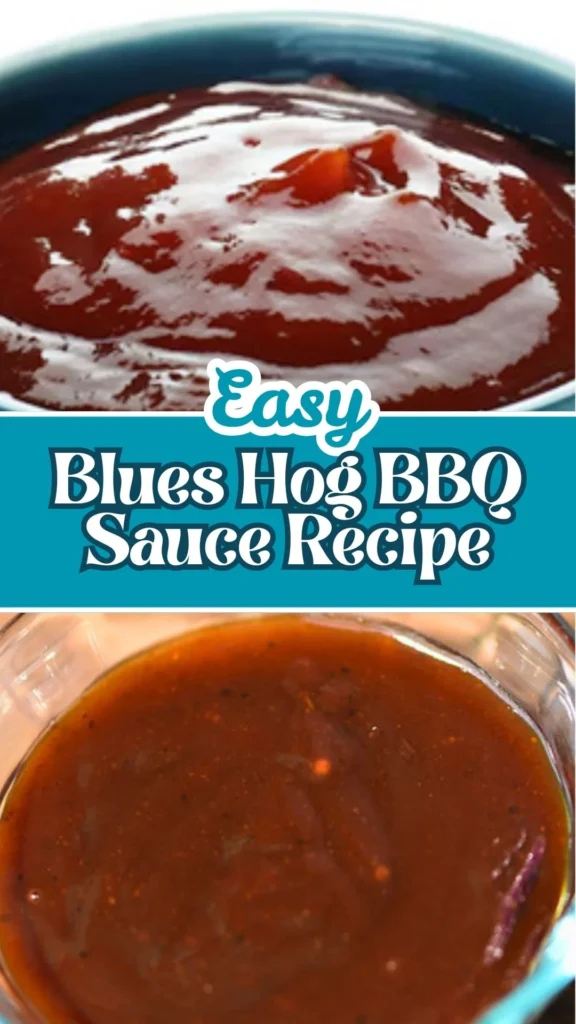
The tomato base provides familiar BBQ comfort, while pure cane syrup adds deep, caramelized sweetness without cloying heaviness. Coarse black pepper delivers robust, earthy spice, complemented by crushed red pepper flakes that bring lingering warmth.
The secret ground mace adds subtle nutmeg-like complexity that rounds out the flavor profile. It’s thinner than traditional Kansas City-style sauces, designed to penetrate meat fibers rather than sit on top, creating that addictive sweet-tangy-spicy balance that competition pitmasters crave.
Ingredients and Kitchen Utensils
Blues Hog BBQ Sauce Recipe Ingredients:
- 1 cup apple cider vinegar
- 1 cup tomato ketchup
- ½ cup pure cane syrup (substitute for high fructose corn syrup)
- 1 tablespoon coarse ground black pepper
- 1 teaspoon crushed red pepper flakes (adjustable for heat preference)
- 1 teaspoon kosher salt
- ¼ teaspoon ground mace (the secret ingredient)
- 1½ teaspoons sugar (optional, for additional sweetness)
Kitchen Utensils:
- Medium saucepan (2-quart capacity)
- Measuring cups and spoons
- Whisk or wooden spoon
- Glass jar or airtight container for storage
- Funnel (optional, for easier bottling)
- Exhaust fan or ventilation
Preparation and Cooking Time with Serving
Prep Time: 5 minutes
Cook Time: 25 minutes
Total Time: 30 minutes
Yield: Approximately 2½ cups of sauce
Servings: Enough for 4-6 pounds of pulled pork, ribs, or brisket
Blues Hog BBQ Sauce Recipe Instructions
Step 1
Measure out all ingredients precisely: 1 cup apple cider vinegar, 1 cup tomato ketchup, ½ cup pure cane syrup, 1 tablespoon coarse ground black pepper, 1 teaspoon crushed red pepper flakes, 1 teaspoon kosher salt, and ¼ teaspoon ground mace.
Step 2
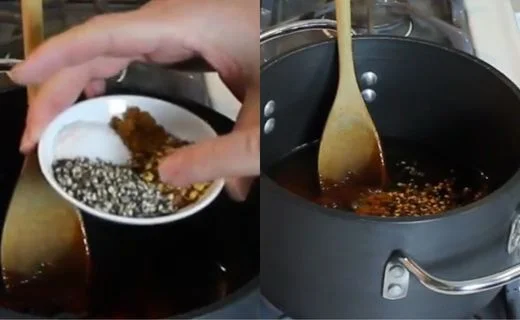
Combine all measured ingredients in a medium saucepan and whisk thoroughly to incorporate the spices evenly throughout the mixture.
Step 3
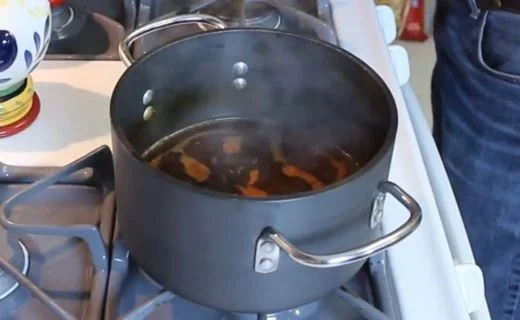
Place the saucepan over medium-high heat and bring the BBQ sauce blues hog recipe to a rolling boil, stirring occasionally to prevent scorching on the bottom.
Step 4
Once boiling, taste the sauce carefully (it will be hot!). If the sweetness isn’t pronounced enough for your preference, stir in 1½ teaspoons of sugar to balance the vinegar’s tang.
Step 5
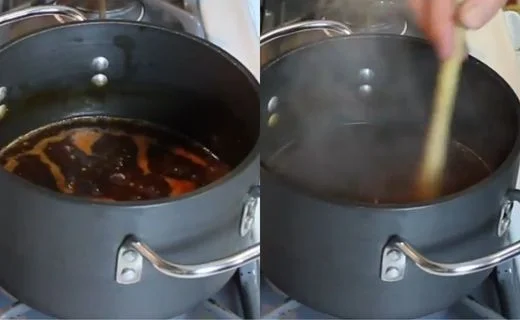
Reduce heat to low and maintain a gentle simmer for approximately 20 minutes. Stir occasionally. Remember, this homemade BBQ sauce recipe should remain thin avoid over-reducing or it will lose its characteristic pourable consistency.
Step 6
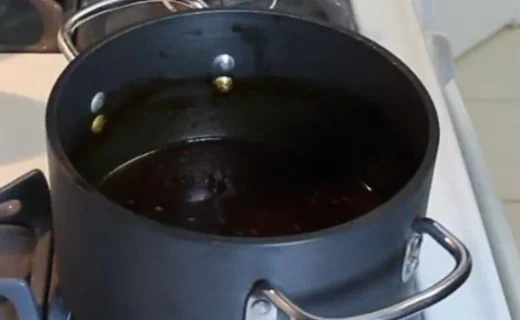
Turn on your exhaust fan or ensure good ventilation, as the simmering vinegar and pepper combination creates strong fumes that can irritate your sinuses and eyes.
Step 7
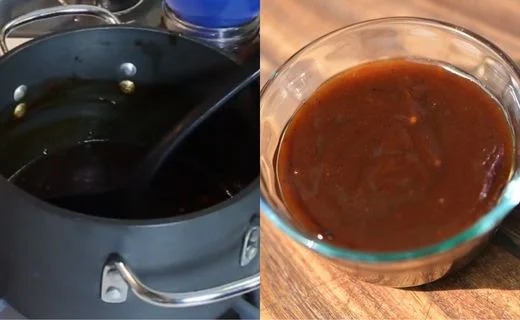
After simmering, remove from heat and carefully pour the hot sauce into a clean glass jar or airtight container using a funnel if available.
Step 8
Allow the sauce to cool completely to room temperature uncovered, then seal and refrigerate. Shake vigorously before each use, just like the commercial Blues Hog Tennessee Red BBQ Sauce bottle.
Customization and Pairing for Serving Ideas
1. Competition-Style Pulled Pork
This is where your copycat blues hog BBQ sauce recipe truly shines. Apply it as a finishing mop during the last 30 minutes of smoking pulled pork shoulder. The thin consistency penetrates the bark beautifully, adding layers of tangy-sweet flavor without overwhelming the meat’s natural smokiness. Toss additional sauce with the pulled meat for serving.
2. Carolina-Memphis Fusion Ribs
Brush this vinegar-based sauce on St. Louis-style or baby back ribs during the final glaze stage. It bridges the gap between Eastern Carolina vinegar sauces and sweeter Memphis styles, creating a unique regional fusion that competition judges love.
3. Smoked Brisket Finishing Sauce
Slice your Texas-style brisket and serve this blue hog BBQ sauce on the side as a dipping option. The acidity cuts through the rich, fatty brisket beautifully, and the thin consistency won’t mask your perfect smoke ring.
4. Smoky Skewer Pairing
Serve this Blues Hog BBQ Sauce Recipe over smoky skewers with roasted vegetables for balanced flavor; pairing with lamb meatballs adds savory depth while fresh herbs brighten presentation for gatherings.
5. Grilled Chicken Thighs
Marinate bone-in chicken thighs in this sauce for 2-4 hours, then grill over medium heat. Reserve extra sauce for basting during the final minutes. The vinegar tenderizes while the sugars caramelize into a gorgeous mahogany glaze.
6. Smoked Turkey Injection Base
Thin this homemade blues hog BBQ sauce recipe with equal parts chicken stock to create a flavor injection for whole smoked turkeys. The vinegar and spices penetrate deep into the breast meat, ensuring juiciness and flavor throughout.
7. Hearty Comfort Fusion
Drizzle the Blues Hog BBQ Sauce Recipe onto tender slow-cooked meats and buttery mashed potatoes for comfort; complementing Braised Lamb enhances richness, while tangy notes cut through heaviness beautifully overall.
8. BBQ Meatball Glaze
Toss homemade or frozen meatballs in this sauce and slow-cook in a crockpot for appetizers. The thin consistency coats each meatball perfectly without becoming gloppy, and the peppery heat adds sophisticated depth to party food.
9. Grill Night Harmony
Use the Blues Hog BBQ Sauce Recipe as a glaze for grilled vegetables and warm flatbreads at dinner; alongside a chicken recipe, the sweet-smoky flavor creates crowd-pleasing variety easily anytime.
10. Pulled Beef or Beef Cheek Tacos
As the recipe creator noted, this sauce is exceptional on pulled beef. Braise beef cheeks or chuck roast low and slow, shred, then toss with this sauce. Serve in warm tortillas with pickled onions and cilantro for barbecue-fusion tacos that showcase the sauce’s versatility beyond traditional pork applications.
Tips for Perfect Blues Hog BBQ Sauce
1. Don’t Skip the Mace
Ground mace is the identified secret ingredient that separates this blues hog BBQ saus from generic vinegar sauces. It provides subtle warmth and complexity similar to nutmeg but with more delicate, peppery notes. You can find it in the spice aisle near cinnamon and nutmeg. Without it, your sauce will taste good but won’t capture that authentic Blues Hog character.
2. Control Your Heat Level
The original recipe calls for 1 teaspoon crushed red pepper flakes, which delivers moderate heat. If you’re sensitive to spice or serving children, reduce to ½ teaspoon or even ¼ teaspoon. You can always add hot sauce at the table, but you can’t remove heat once it’s incorporated. Remember, the heat intensifies slightly as the sauce sits in the refrigerator overnight.
3. Use Pure Cane Syrup for Authenticity
While the commercial Blues Hog uses high fructose corn syrup, pure cane syrup (often labeled as “pure cane syrup” or “golden syrup”) creates a richer, darker color and slightly thicker consistency that many home cooks prefer. Avoid substituting with pancake syrup or light corn syrup, which won’t provide the same depth. Look for brands like Steen’s or Alaga in the syrup aisle.
4. Mind Your Simmer Time
This BBQ sauce recipe should remain thin and pourable, not thick like bottled KC Masterpiece. Simmer for only 20 minutes any longer and you’ll reduce too much liquid, concentrating flavors excessively and creating a thicker consistency than intended. The sauce thickens slightly as it cools, so it should look quite thin while hot on the stove.
5. Ventilation Is Non-Negotiable
When simmering vinegar-based sauces with peppers, the fumes can be intense and irritating to eyes, nose, and throat. Turn on your range hood, open windows, or position a fan near the stove. This isn’t just comfort prolonged exposure to concentrated vinegar vapors can cause respiratory irritation. If you start coughing, step away and increase ventilation immediately.
6. Taste and Adjust Sweetness
The original creator found his first batch needed additional sweetness to balance the vinegar’s assertiveness. After bringing to a boil, taste carefully (blow on a spoonful to cool it first) and add the optional 1½ teaspoons sugar if needed. Different ketchup brands vary in sweetness, so this adjustment ensures consistency. Add sugar gradually you can always add more, but you can’t remove it.
7. Let Flavors Marry Overnight
While you can use this homemade BBQ sauce recipe immediately, the flavors develop remarkable depth after 24 hours in the refrigerator. The spices bloom, the vinegar mellows slightly, and everything integrates into a more cohesive sauce. Make it a day ahead of your cookout for best results. The sauce continues improving for up to three days before reaching peak flavor.
Storage and Reheating Guidance
Store your copycat Blues Hog BBQ sauce recipe in an airtight glass jar or container in the refrigerator for up to 3-4 weeks. The high vinegar content acts as a natural preservative. No reheating necessary shake vigorously and use cold directly from the fridge, or warm gently in a saucepan over low heat if preferred for basting.
Common Queries and FAQs
Discover answers to the most common Blues Hog BBQ Sauce Recipe questions people ask.
Can I substitute white vinegar for apple cider vinegar in this blues hog BBQ sauce recipe?
While you can use white vinegar, apple cider vinegar provides a fruity, mellower acidity that’s essential to the Blues Hog profile. White vinegar is sharper and more one-dimensional. If you must substitute, use 75% white vinegar and 25% apple juice to approximate the complexity.
What can I use instead of ground mace if I can’t find it?
Ground nutmeg is the closest substitute since mace comes from nutmeg’s outer covering. Use the same ¼ teaspoon measurement, though the flavor will be slightly sweeter and less peppery. In a pinch, a tiny dash of allspice (⅛ teaspoon) works, but mace truly makes this recipe authentic.
Why is my homemade blues hog BBQ sauce recipe darker than the store-bought version?
The pure cane syrup substitute creates a darker color than the high fructose corn syrup in the commercial version. This is actually a positive it indicates real cane sugar caramelization. The flavor remains authentic, and many prefer the richer appearance. If you want a lighter color, use light corn syrup instead.
How do I make this blue hog BBQ sauce less spicy for kids?
Reduce crushed red pepper flakes to ¼ teaspoon or omit entirely for a mild version. The coarse black pepper provides enough flavor without significant heat. You can also increase the sugar to 2 teaspoons to add sweetness that balances any remaining spice. Make a family-friendly batch and keep hot sauce on the table for adults.
Can I use this BBQ sauce blues hog recipe as a marinade?
Absolutely! The high vinegar content makes it an excellent tenderizing marinade for tougher cuts like chicken thighs, pork shoulder, or beef chuck. Marinate for 2-6 hours (no longer, or the vinegar can make meat mushy). Reserve some unused sauce for basting during cooking, as you should never use marinade that’s touched raw meat without boiling it first.
Is this sauce supposed to be this thin, or did I do something wrong?
Yes, authentic Blues Hog Tennessee Red is intentionally thin it’s a “mop sauce” designed to penetrate meat rather than coat it like thicker Kansas City-style sauces. It should have the consistency of slightly thickened vinegar. If yours seems watery after cooling, you may have under-simmered; if it’s thick, you over-reduced it. Aim for a pourable, syrupy consistency.
Can I double or triple this copycat blues hog BBQ sauce recipe?
Yes, this recipe scales perfectly. Use a larger saucepan (4-6 quart for doubling) and increase simmer time by 5-10 minutes to ensure proper flavor development. Watch carefully to avoid over-reduction. Large batches are ideal for meal prep or competition cooking since the sauce keeps well refrigerated.
What’s the best way to apply this sauce to ribs or pulled pork?
For ribs, brush it on during the last 15-20 minutes of cooking, applying 2-3 thin coats and allowing each to set before adding more. For pulled pork, toss the shredded meat with sauce in a large bowl (start with ½ cup per pound of meat and adjust to taste). The thin consistency absorbs beautifully into warm, freshly pulled pork.
Can I can or preserve this homemade BBQ sauce recipe for long-term storage?
While the high vinegar content makes it relatively shelf-stable, home canning BBQ sauce requires proper water bath canning procedures and tested recipes to ensure safety. This particular recipe hasn’t been tested for canning. For best safety and quality, stick with refrigerator storage for 3-4 weeks or freeze in portions for up to 6 months.
Does this taste exactly like the original Blues Hog Tennessee Red BBQ Sauce?
The recipe creator reports it’s remarkably close capturing the vinegary tang, peppery heat, and sweet balance. Expect slight differences: this version is typically darker (from cane syrup), possibly slightly thicker, and potentially spicier depending on your red pepper measurement. The mace provides that authentic “secret ingredient” complexity that makes it convincingly similar.
What meats work best with this blues hog BBQ saus?
The sauce excels with fatty, rich meats that benefit from acidic cutting power: pulled pork shoulder, pork ribs, beef brisket, pulled beef, chicken thighs, and smoked turkey. The creator specifically notes exceptional results with pulled beef. It’s less ideal for lean meats like chicken breast or pork tenderloin, which can become overpowered by the assertive vinegar.
Can I make this sauce less vinegary?
You can reduce apple cider vinegar to ¾ cup and add ¼ cup water, though this moves away from the authentic Blues Hog profile. A better approach is to increase the cane syrup to ⅔ cup, which balances the tang with more sweetness while maintaining the vinegar-forward character that defines this Tennessee-style sauce.
Blues Hog BBQ Sauce Recipe
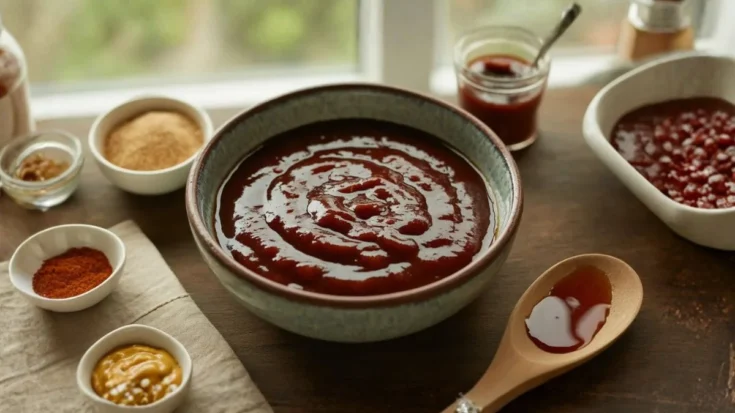
If you’ve ever tasted Blues Hog Tennessee Red BBQ Sauce at a barbecue competition or slathered it on competition-worthy ribs, you know it’s liquid gold. This copycat Blues Hog BBQ sauce recipe brings that championship flavor right to your kitchen. Unlike thick, molasses-heavy sauces, this homemade Blues Hog BBQ sauce recipe delivers a thin, vinegar-forward profile with peppery heat and balanced sweetness that’s become legendary in the BBQ world.
Ingredients
- 1 cup apple cider vinegar
- 1 cup tomato ketchup
- ½ cup pure cane syrup (substitute for high fructose corn syrup)
- 1 tablespoon coarse ground black pepper
- 1 teaspoon crushed red pepper flakes (adjustable for heat preference)
- 1 teaspoon kosher salt
- ¼ teaspoon ground mace (the secret ingredient)
- 1½ teaspoons sugar (optional, for additional sweetness
Instructions
Step 1: Measure out all ingredients precisely: 1 cup apple cider vinegar, 1 cup tomato ketchup, ½ cup pure cane syrup, 1 tablespoon coarse ground black pepper, 1 teaspoon crushed red pepper flakes, 1 teaspoon kosher salt, and ¼ teaspoon ground mace.
Step 2: Combine all measured ingredients in a medium saucepan and whisk thoroughly to incorporate the spices evenly throughout the mixture.
Step 3: Place the saucepan over medium-high heat and bring the BBQ sauce blues hog recipe to a rolling boil, stirring occasionally to prevent scorching on the bottom.
Step 4: Once boiling, taste the sauce carefully (it will be hot!). If the sweetness isn’t pronounced enough for your preference, stir in 1½ teaspoons of sugar to balance the vinegar’s tang.
Step 5: Reduce heat to low and maintain a gentle simmer for approximately 20 minutes. Stir occasionally. Remember, this homemade BBQ sauce recipe should remain thin avoid over-reducing or it will lose its characteristic pourable consistency.
Step 6: Turn on your exhaust fan or ensure good ventilation, as the simmering vinegar and pepper combination creates strong fumes that can irritate your sinuses and eyes.
Step 7: After simmering, remove from heat and carefully pour the hot sauce into a clean glass jar or airtight container using a funnel if available.
Step 8: Allow the sauce to cool completely to room temperature uncovered, then seal and refrigerate. Shake vigorously before each use, just like the commercial Blues Hog Tennessee Red BBQ Sauce bottle.
Notes
Store your copycat Blues Hog BBQ sauce recipe in an airtight glass jar or container in the refrigerator for up to 3-4 weeks. The high vinegar content acts as a natural preservative. No reheating necessary shake vigorously and use cold directly from the fridge, or warm gently in a saucepan over low heat if preferred for basting.
Nutrition Information:
Yield:
6Serving Size:
1Amount Per Serving: Calories: 50
This copycat Blues Hog BBQ sauce recipe delivers championship-quality flavor without the premium price tag or trip to specialty stores. With simple pantry staples and that secret mace addition, you’ve now got a homemade Blues Hog BBQ sauce recipe that rivals the Tennessee Red legend pitmasters swear by.
The tangy-sweet-spicy balance transforms everyday pulled pork into competition-worthy barbecue, and the thin consistency ensures it penetrates deep into every meat fiber. Mix up a batch, let those flavors marry overnight, and taste why this sauce dominates barbecue competitions nationwide. Your backyard cookouts just got a serious upgrade!
If you enjoyed this recipe, be sure to save it and share it with friends. Don’t forget to follow us on Pinterest and YouTube for more cozy and comfort recipes.