
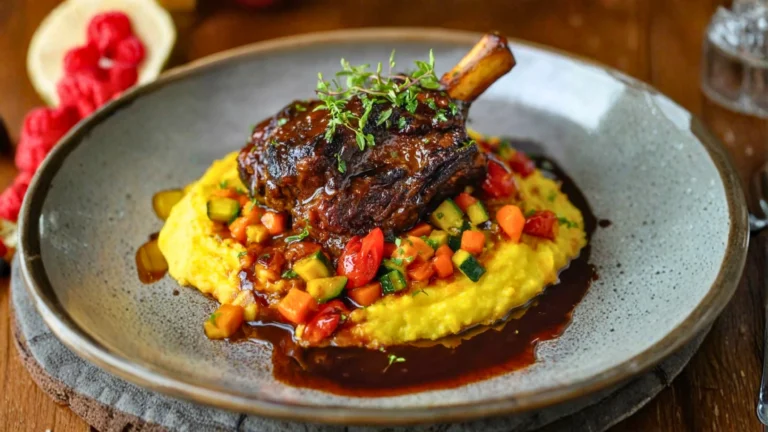

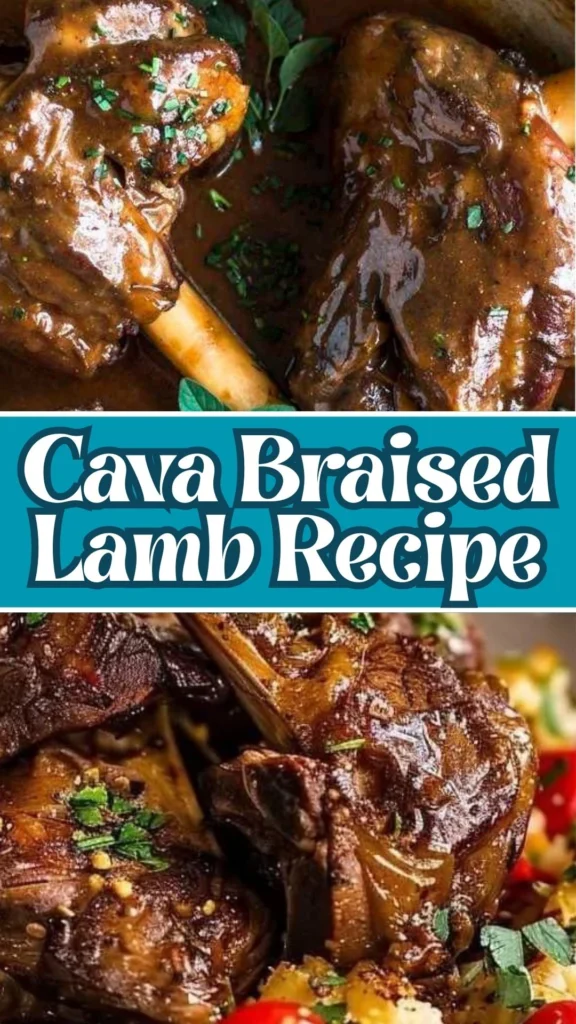
There’s something utterly magical about a perfectly braised lamb shank that falls off the bone with the gentlest nudge of your fork.
This copycat Cava braised lamb recipe brings the beloved Mediterranean flavors of your favorite restaurant right into your home kitchen. Inspired by Moroccan cooking traditions and elevated with French braising techniques, this braised lamb shank recipe transforms humble ingredients into an unforgettable dining experience.
Whether you’re using a cava braised lamb recipe oven method or adapting it for slow cooker convenience, the result is tender, succulent meat bathed in a rich wine-based sauce that’ll have everyone asking for seconds. Paired with creamy caramelized onion risotto, this dish is pure comfort elegance.
What Does It Taste Like?
Imagine deeply savory lamb that’s been bathed in red wine and aromatic vegetables for hours, resulting in meat so tender it practically melts on your tongue.
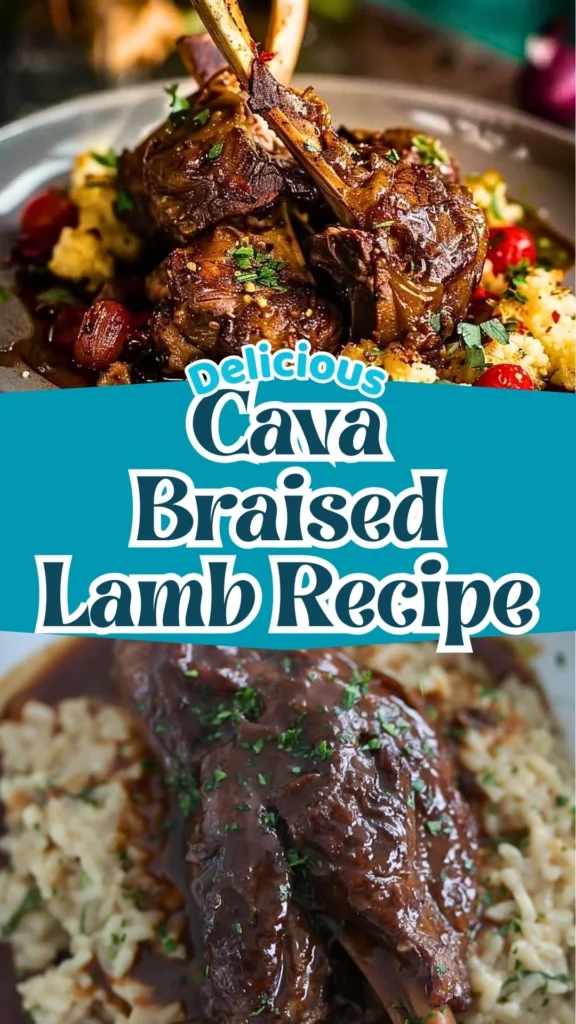
The braised lamb chunks deliver rich, earthy flavors with subtle sweetness from caramelized root vegetables and a beautiful depth from the wine reduction. Each bite of this Mediterranean lamb shoulder recipe offers layers of complexity herbaceous notes from fresh rosemary and thyme, umami richness from the beef stock, and a velvety texture that coats your palate.
The accompanying risotto adds creamy, slightly tangy notes from Parmesan, balanced perfectly with sweet caramelized onions and bright basil that cuts through the richness beautifully.
Cava Braised Lamb Recipe Ingredients You’ll Need
For the Braised Lamb Shanks
- 4 lamb shanks (about 3 lbs total, approximately 12 oz each)
- Salt and freshly cracked black pepper
- Olive oil (a little for brushing + 2 Tbsp for searing)
- 1 large yellow onion – medium to large dice
- 2 carrots – peeled, medium to large dice
- 2 ribs celery – medium to large dice
- 1 parsnip (medium size or half of a large one) – peeled, medium to large dice
- 1 turnip – peeled, medium to large dice
- 4–5 whole garlic cloves
- 2 cups good red wine (Cabernet Sauvignon, Merlot, Shiraz, or Malbec)
- 3 Tbsp tomato paste
- 6 cups good beef stock
- Small bunch fresh flat-leaf Italian parsley
- Few sprigs fresh thyme
- Few sprigs fresh rosemary
For the Caramelized Onion & Fresh Basil Risotto
- 2 Tbsp unsalted butter
- 2 medium yellow onions – peeled, medium to large dice
- 2 cloves garlic – finely minced
- 1 lb (about 2 cups) Arborio rice (short grain)
- 1½ cups good white wine (Chardonnay, Sauvignon Blanc, or Pinot Grigio)
- 48 oz (6 cups) chicken stock
- ¼ cup heavy cream
- 1 cup freshly grated Parmesan cheese
- ¼ cup fresh basil – chiffonade (thinly sliced)
- Salt and ground white pepper
Kitchen Utensils You’ll Need
- Large Dutch oven or rondeau pot with lid
- Large skillet or sauté pan for risotto
- Fine mesh strainer or chinois
- Sharp chef’s knife
- Cutting board
- Vegetable peeler
- Wooden spoon or silicone spatula
- Ladle
- Measuring cups and spoons
- Medium pot for reducing sauce
Preparation and Cooking Time
Prep Time: 25 minutes
Cook Time: 2 hours 30 minutes (lamb) + 1 hour 15 minutes (risotto)
Total Time: Approximately 4 hours
Servings: 4 generous portions
Cava Braised Lamb Recipe Instructions
Preparing the Braised Lamb Shanks
Step 1: Prep Your Vegetables
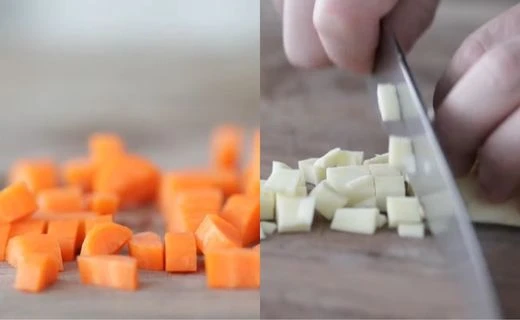
Peel and dice the onion, carrots, celery, parsnip (use half if it’s large), and turnip into medium to large, consistent pieces. This ensures even cooking during the braising process. Place all diced vegetables in a bowl. Add 4–5 whole garlic cloves to the mix.
Step 2: Season and Sear the Lamb
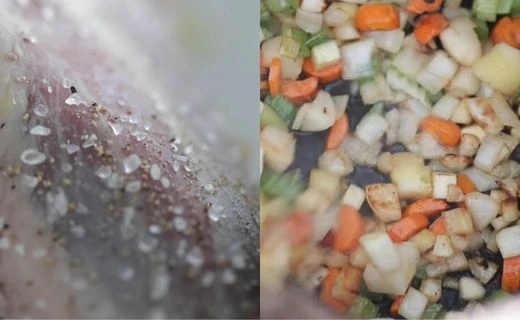
Pat the lamb shanks completely dry with paper towels this is crucial for achieving a beautiful sear. Season all sides generously with salt and freshly cracked black pepper. Lightly brush each shank with olive oil. Heat 2 Tbsp olive oil in your Dutch oven over medium-high heat until it’s lightly smoking. Working in batches if necessary to avoid overcrowding, sear each lamb shank on all four sides until deeply golden brown, about 3–4 minutes per side. This caramelization builds incredible flavor depth. Remove shanks and set aside.
Step 3: Build the Flavor Base
In the same pot (don’t clean it all those browned bits are liquid gold), add your prepared vegetables and garlic. Sear over medium-high heat for about 10 minutes, stirring every 2–3 minutes. You want nice browning and caramelization on those vegetables for maximum flavor development.
Step 4: Deglaze and Create the Braising Liquid
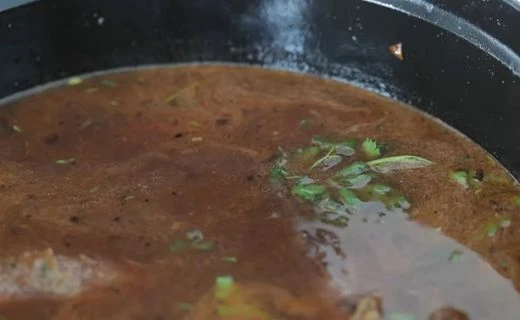
Pour in 2 cups of good red wine to deglaze the pot, scraping up all those beautiful browned bits from the bottom. Let the wine reduce by half until you have about 1 cup of liquid remaining this concentrates the flavors beautifully. Stir in 3 Tbsp tomato paste until fully incorporated. Add 6 cups of beef stock, then toss in the fresh parsley, thyme sprigs, and rosemary sprigs. Season the braising liquid generously with salt and black pepper. Taste it and adjust the seasoning remember, this liquid will flavor your entire dish.
Step 5: Braise the Lamb
Return the seared lamb shanks to the pot, nestling them into the liquid so they’re mostly submerged. Cover with the lid and transfer to a preheated 350°F (175°C) oven. Braise for approximately 2½ hours, until the meat is fork-tender and pulls away gently from the bone. The low, slow heat breaks down all the connective tissue, creating that melt-in-your-mouth texture this braised lamb leg recipe method is famous for.
Making the Caramelized Onion & Basil Risotto
Step 6: Start the Caramelized Onions (begin during the last 1–1.5 hours of lamb braising)
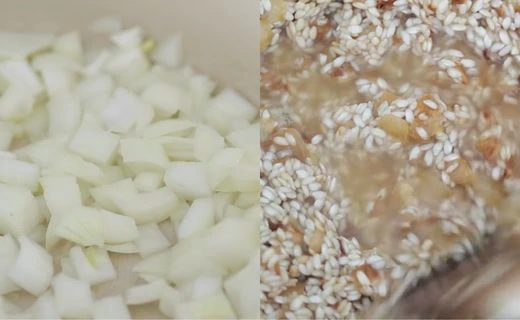
In a separate pot, melt 2 Tbsp butter over medium heat. Add your diced onions and cook slowly, stirring every 5–6 minutes, for about 45 minutes. Patience is key here you want deeply caramelized, golden-brown onions with concentrated sweetness. Add the minced garlic and sauté for 1–2 minutes until fragrant.
Step 7: Toast the Arborio Rice
Add the Arborio rice to the caramelized onions. Stir constantly, toasting the rice until it loses its bright white color and becomes slightly translucent around the edges, just a few minutes.
Step 8: Build the Risotto
Deglaze with 1½ cups white wine, stirring until the wine is completely absorbed. Now begins the meditative process of making risotto. Keep your chicken stock hot in a separate pot. Add stock one ladle at a time, stirring constantly. As each addition is absorbed, add another ladle. Continue this process for 25–30 minutes until the rice is creamy, tender, and has that signature risotto texture al dente with a luscious, flowing consistency.
Step 9: Finish the Risotto
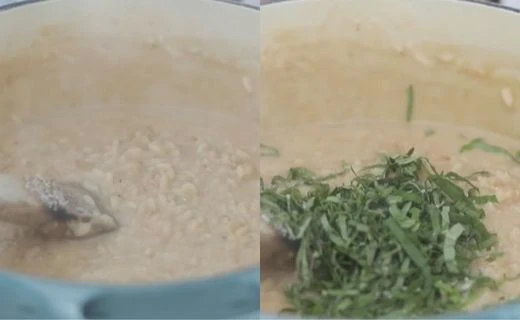
Stir in ¼ cup heavy cream and 1 cup freshly grated Parmesan cheese. Mix until the cheese is completely melted and incorporated into the rice. Fold in the chiffonade basil. Season carefully with salt and white pepper, tasting multiple times. Remember that Parmesan is quite salty, so add salt gradually.
Final Assembly
Step 10: Finish and Plate
Remove the Dutch oven from the oven. Carefully lift out the lamb shanks and let them rest for 4–5 minutes. Strain the braising liquid through a fine mesh strainer into a medium pot, pressing the vegetables to extract every drop of flavorful liquid. Reduce this sauce over high heat for 4–5 minutes until it’s slightly thickened and glossy.
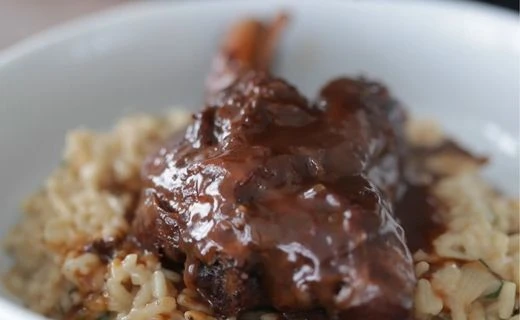
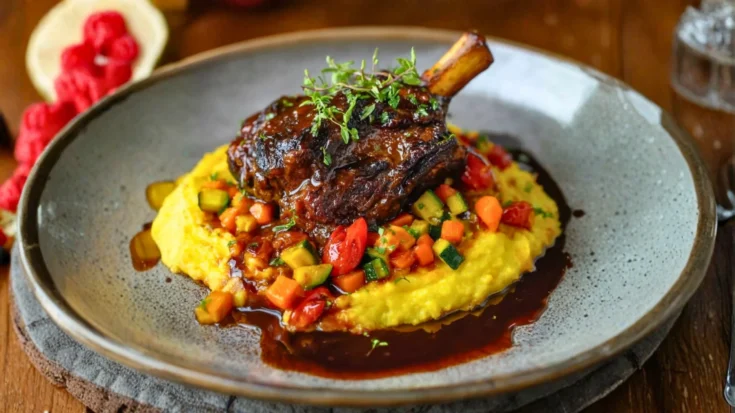
To serve: Place a generous scoop of risotto in the center of a wide, shallow bowl. Position a lamb shank on top of the risotto. Ladle the reduced braising sauce generously over the lamb and around the risotto. Garnish with fresh parsley leaves, thyme, or a small sprig of rosemary for that restaurant-quality presentation.
Customization and Pairing Ideas for Serving
1. Harissa-Spiced Variation
Transform this into a harissa braised lamb by whisking 2–3 tablespoons of harissa paste into your braising liquid. This North African chili paste adds smoky heat and complex spice notes that pair beautifully with lamb. You can also create a harissa yogurt sauce on the side by mixing Greek yogurt with harissa, lemon juice, and fresh mint for drizzling.
2. Moroccan-Inspired Enhancement
Create an authentic Moroccan braised lamb by adding warming spices to your braising liquid. Include a cinnamon stick, 1 teaspoon cumin, ½ teaspoon coriander, and a pinch of saffron threads. Add dried apricots or prunes during the last hour of braising for traditional sweetness. Serve over couscous instead of risotto, and garnish with toasted almonds and fresh cilantro.
3. Slow Cooker Adaptation
For a cava braised lamb recipe slow cooker version, follow steps 1–4 on the stovetop, then transfer everything to your slow cooker. Cook on low for 7–8 hours or high for 4–5 hours. This hands-off method is perfect for busy days and yields equally tender results. The slow cooker’s gentle heat is ideal for breaking down the tough connective tissues in lamb shanks.
4. Creamy Potato Pairing
Rich and buttery flavors enhance braised lamb, especially when served with carnivore mashed potatoes. The smooth texture absorbs savory juices, creating a comforting and indulgent side dish that elevates any meal.
5. Alternative Grain Bases
While the risotto is spectacular, you can serve your braised lamb over creamy polenta, buttery mashed potatoes, or even Mediterranean-style orzo tossed with lemon and herbs. Each base offers a different texture experience while soaking up that gorgeous braising liquid. Pearl couscous (Israeli couscous) tossed with olive oil and fresh herbs also makes an excellent, quicker alternative.
6. Aromatic Rice Accent
Tender lamb pairs beautifully with lightly seasoned cava saffron rice, adding vibrant color and fragrant aroma. This combination balances richness with subtle spice, making every bite flavorful and memorable.
7. Wine Pairing Suggestions
Since this dish features red wine in the braising liquid, complement it with a full-bodied red wine for serving. A Côtes du Rhône, Syrah/Shiraz, or Malbec echoes the cooking flavors beautifully. For white wine lovers, a rich, oaked Chardonnay can handle the dish’s intensity. The wine’s tannins cut through the richness of the lamb while enhancing the herbaceous notes.
8. Spicy Veggie Boost
Roasted or sautéed cava fiery broccoli adds a bold, slightly spicy crunch that contrasts tender lamb and creamy sides, creating a well-rounded, flavorful meal perfect for family dinners or special occasions.
9. Vegetable Side Additions
Elevate your plate with roasted Mediterranean vegetables on the side. Try roasted cherry tomatoes with garlic, sautéed broccolini with lemon, or honey-glazed carrots. A simple arugula salad dressed with lemon vinaigrette provides a peppery, fresh contrast to the rich lamb. Roasted asparagus with shaved Parmesan also complements the dish’s elegance.
10. Tangy Dressing Finish
For fresh flavor contrast, drizzle cava tahini caesar dressing over roasted vegetables or a green salad. Its nutty, creamy texture enhances the richness of lamb while adding a zesty, Mediterranean-inspired touch.
11. Leftover Transformation
Shred any leftover braised lamb chunks and transform them into incredible shepherd’s pie, lamb ragu for pasta, or filling for flatbreads with tzatziki and fresh vegetables. The meat freezes beautifully in its braising liquid for up to 3 months, making this an excellent meal-prep option for future quick dinners.
Essential Tips for Perfect Results
1. Choose Quality Lamb Shanks
The foundation of this braised lamb shank recipe is the quality of your meat. Look for lamb shanks with good marbling and bright, pink-red color. Each shank should weigh about 12 ounces for even cooking. If you can source grass-fed or New Zealand lamb, you’ll notice a cleaner, less gamey flavor. Ask your butcher to French the shanks (clean the bone) for an elegant presentation.
2. Don’t Skip the Searing Step
Proper searing is non-negotiable for developing deep, complex flavors in your braised lamb shoulder recipe. Make sure your lamb shanks are completely dry before searing moisture is the enemy of browning. Heat your oil until it’s just smoking, and resist the urge to move the meat around. Let each side develop a deep, golden-brown crust for 3–4 minutes. Those caramelized bits (fond) that stick to the pan are pure flavor gold that gets incorporated when you deglaze.
3. Master the Braising Liquid Balance
Your braising liquid should come about two-thirds up the sides of the lamb shanks not completely submerged. This allows the exposed portions to develop texture while the submerged parts become supremely tender. The liquid should be well-seasoned before braising begins; taste it and adjust. Remember, as it reduces, flavors concentrate, so slightly under-season initially if you’re uncertain.
4. Low and Slow is the Secret
Braising is about patience and gentle heat. A temperature of 350°F (175°C) is ideal hot enough to break down connective tissue but not so hot that the meat dries out. If you’re adapting this to a cava braised lamb recipe oven at different temperatures, remember: lower temperatures (325°F) require longer cooking (3+ hours), while higher temps (375°F) cook faster but risk drying out the meat. The meat is done when it’s fork-tender and pulls away from the bone with minimal effort.
5. Perfect Risotto Requires Constant Attention
Making risotto alongside your lamb requires multitasking, but the payoff is worth it. Keep your stock hot throughout the process adding cold stock to hot rice stops the cooking process and affects the final texture. Stir constantly but gently to release the rice’s natural starches without breaking the grains. The finished risotto should flow slowly when you tilt the pan Italians call this “all’onda” (like a wave). If it’s too thick, add a bit more hot stock; if too thin, cook a minute longer.
6. Reduce Your Sauce Properly
After straining your braising liquid, reduce it over high heat to concentrate flavors and achieve a velvety, slightly syrupy consistency. This should take 4–5 minutes of vigorous boiling. You’ll know it’s ready when the sauce coats the back of a spoon and leaves a clear line when you run your finger through it. Don’t over-reduce, or it becomes too intense and salty. If you accidentally over-reduce, simply add a splash of stock to bring it back.
7. Timing Your Components
The key to serving this dish hot and fresh is timing. Start your lamb first, then begin the caramelized onions about 1.5 hours before the lamb finishes. Start the actual risotto process about 40 minutes before serving time. This ensures everything finishes simultaneously. If your lamb finishes early, keep it warm in its braising liquid with the pot covered it will stay perfectly moist. The risotto, however, must be served immediately for the best texture, so make this your final component.
Storage and Reheating Guidance
Store leftover lamb shanks in their braising liquid in an airtight container in the refrigerator for up to 4 days, or freeze for up to 3 months. Reheat gently in a covered pot at 325°F for 25–30 minutes until warmed through. Risotto is best fresh but can be refrigerated for 2 days; reheat with a splash of stock, stirring constantly over medium-low heat.
Common Queries and FAQs
Here, we’ve got you covered with some common questions about the Cava Braised Lamb Recipe that people often ask.
Can I use lamb shoulder instead of lamb shanks for this recipe?
Absolutely! A boneless braised lamb shoulder recipe works beautifully with this method. Use a 3–4 lb boneless shoulder, tied with kitchen twine. The braising time will be similar (2.5–3 hours), though you’ll want to check for tenderness around the 2-hour mark. Lamb shoulder has more marbling than shanks, resulting in incredibly rich, fatty meat that some people prefer. You can also use bone-in shoulder cut into large chunks just adjust cooking time to 2–2.5 hours since smaller pieces cook faster.
What’s the difference between using a Dutch oven versus a slow cooker?
The cava braised lamb recipe oven method using a Dutch oven gives you better control over browning and allows for a richer fond development. The dry heat of the oven also helps the exposed portions of the lamb develop texture. A slow cooker, however, offers convenience and more even, gentle heat that’s forgiving if you need to cook longer. The main difference in results is that oven braising produces a slightly more concentrated sauce with deeper flavors, while slow cooker braising yields fall-apart-tender meat with a lighter sauce. Both methods produce delicious results.
Can I make this recipe without wine?
Yes, though wine adds significant depth and acidity. For the braising liquid, replace the red wine with an equal amount of beef stock plus 2 tablespoons of balsamic vinegar or red wine vinegar for acidity. For the risotto, substitute white wine with chicken stock plus 1 tablespoon lemon juice. You can also use non-alcoholic wine if you want that wine flavor without the alcohol. The acidity is key it balances the richness of the lamb and helps tenderize the meat during braising.
How do I know when the lamb is perfectly done?
The lamb is done when it’s fork-tender and the meat pulls away from the bone with minimal resistance. Insert a fork into the thickest part of the meat and give it a gentle twist if it slides in easily and the meat starts to fall apart, it’s ready. The internal temperature should reach around 190–205°F for that melt-in-your-mouth texture. If the meat still feels tough or requires effort to pull, continue braising in 30-minute increments, checking periodically. Remember, you can’t really overcook braised lamb the longer it goes, the more tender it becomes.
What are the best root vegetables to use for braising?
The recipe calls for carrots, celery, parsnips, and turnips, which create a classic mirepoix base with added sweetness and earthiness. However, you can customize based on preference or availability. Excellent alternatives include sweet potatoes (add sweetness), celeriac/celery root (adds earthy, celery-like flavor), rutabaga (similar to turnip), or fennel bulb (adds subtle anise notes that complement lamb beautifully). Avoid watery vegetables like zucchini or quick-cooking vegetables like bell peppers, as they’ll disintegrate during the long braising time.
Can I prepare this dish in advance?
This is actually an excellent make-ahead dish! Braise the lamb completely up to 2 days in advance. Let it cool in the braising liquid, then refrigerate. The flavors actually deepen and improve overnight. When ready to serve, bring the lamb back to room temperature for 30 minutes, then reheat gently in a 325°F oven for 25–30 minutes. The risotto, however, must be made fresh just before serving it doesn’t reheat well and loses its creamy texture. Prepare all risotto ingredients in advance for quick assembly.
What if I don’t have Arborio rice for the risotto?
Arborio rice is ideal for risotto because of its high starch content, which creates that signature creamy texture. However, other short-grain rice varieties like Carnaroli (actually preferred by many Italian chefs) or Vialone Nano work equally well or even better. In a pinch, you can use sushi rice, though the texture will be slightly different. Avoid long-grain rice like basmati or jasmine they don’t release enough starch to create proper risotto texture. If you can’t find any appropriate rice, consider serving the lamb over creamy polenta or mashed potatoes instead.
How can I make the sauce thicker?
If your reduced braising sauce isn’t thick enough, you have several options. Continue reducing it over high heat until it reaches your desired consistency. For a quicker fix, create a slurry by mixing 1 tablespoon cornstarch with 2 tablespoons cold water, then whisk it into the simmering sauce and cook for 2 minutes until thickened. Alternatively, you can create a beurre manié (equal parts butter and flour mixed into a paste) and whisk small amounts into the sauce until you reach the perfect consistency. Some chefs also add a tablespoon of cold butter at the end and swirl it in for a glossy, silky finish.
Is this recipe suitable for entertaining guests?
Absolutely! This copycat Cava braised lamb recipe is perfect for entertaining because most of the work happens hands-off in the oven. You can braise the lamb in advance and simply reheat it before serving. The impressive presentation a whole lamb shank resting on creamy risotto with rich sauce looks restaurant-quality and never fails to wow guests. The recipe scales easily for larger groups (just use a bigger pot or multiple pots). The only component that requires last-minute attention is the risotto, but even that can be partially prepared in advance by caramelizing the onions ahead of time.
What’s the best way to remove excess fat from the braising liquid?
After braising, if you notice a lot of fat floating on the surface of your braising liquid, you have several options. The easiest method is to refrigerate the liquid overnight the fat will solidify on top and can be easily lifted off with a spoon. For same-day serving, use a fat separator (a special pitcher with a spout at the bottom that pours from beneath the fat layer). Alternatively, gently tilt your pot and use a large spoon to skim off the fat from the surface. You can also lay paper towels on the surface to absorb excess fat, though this method is less efficient for large quantities.
Can I add Mediterranean or Middle Eastern spices to make it more authentic?
Definitely! While this recipe focuses on classic French braising techniques, you can easily transform it into a more Moroccan braised lamb by incorporating warm spices. Add 1 teaspoon ground cumin, ½ teaspoon ground coriander, ½ teaspoon cinnamon, a pinch of saffron, and ¼ teaspoon cayenne pepper to your braising liquid. Include preserved lemons (cut into quarters) for authentic Moroccan tang. For a harissa braised lamb variation, stir harissa paste into the braising liquid or serve it on the side. These spices complement lamb’s natural flavors beautifully without overwhelming the dish.
Why is my risotto gummy or mushy?
Gummy risotto typically results from over-stirring or overcooking. While risotto needs frequent stirring to release starches, too much aggressive stirring breaks the rice grains and creates a gluey texture. Stir gently and consistently, but don’t beat it. Mushy risotto happens when you’ve cooked it too long or added too much liquid at once. Add stock gradually, allowing each addition to be absorbed before adding more. The rice should be al dente tender but with a slight firmness in the center. If you’ve overcooked it, there’s unfortunately no fix, but you can repurpose it into arancini (fried risotto balls) for your next meal!
Cava Braised Lamb Recipe
There’s something utterly magical about a perfectly braised lamb shank that falls off the bone with the gentlest nudge of your fork. This copycat Cava braised lamb recipe brings the beloved Mediterranean flavors of your favorite restaurant right into your home kitchen.
Ingredients
- 4 lamb shanks (about 3 lbs total, approximately 12 oz each)
- Salt and freshly cracked black pepper
- Olive oil (a little for brushing + 2 Tbsp for searing)
- 1 large yellow onion – medium to large dice
- 2 carrots – peeled, medium to large dice
- 2 ribs celery – medium to large dice
- 1 parsnip (medium size or half of a large one) – peeled, medium to large dice
- 1 turnip – peeled, medium to large dice
- 4–5 whole garlic cloves
- 2 cups good red wine (Cabernet Sauvignon, Merlot, Shiraz, or Malbec)
- 3 Tbsp tomato paste
- 6 cups good beef stock
- Small bunch fresh flat-leaf Italian parsley
- Few sprigs fresh thyme
- Few sprigs fresh rosemary
- 2 Tbsp unsalted butter
- 2 medium yellow onions – peeled, medium to large dice
- 2 cloves garlic – finely minced
- 1 lb (about 2 cups) Arborio rice (short grain)
- 1½ cups good white wine (Chardonnay, Sauvignon Blanc, or Pinot Grigio)
- 48 oz (6 cups) chicken stock
- ¼ cup heavy cream
- 1 cup freshly grated Parmesan cheese
- ¼ cup fresh basil – chiffonade (thinly sliced)
- Salt and ground white pepper
Instructions
Preparing the Braised Lamb Shanks
Step 1: Prep Your Vegetables
Peel and dice the onion, carrots, celery, parsnip (use half if it’s large), and turnip into medium to large, consistent pieces. This ensures even cooking during the braising process. Place all diced vegetables in a bowl. Add 4–5 whole garlic cloves to the mix.
Step 2: Season and Sear the Lamb
Pat the lamb shanks completely dry with paper towels this is crucial for achieving a beautiful sear. Season all sides generously with salt and freshly cracked black pepper. Lightly brush each shank with olive oil. Heat 2 Tbsp olive oil in your Dutch oven over medium-high heat until it’s lightly smoking. Working in batches if necessary to avoid overcrowding, sear each lamb shank on all four sides until deeply golden brown, about 3–4 minutes per side. This caramelization builds incredible flavor depth. Remove shanks and set aside.
Step 3: Build the Flavor Base
In the same pot (don’t clean it all those browned bits are liquid gold), add your prepared vegetables and garlic. Sear over medium-high heat for about 10 minutes, stirring every 2–3 minutes. You want nice browning and caramelization on those vegetables for maximum flavor development.
Step 4: Deglaze and Create the Braising Liquid
Pour in 2 cups of good red wine to deglaze the pot, scraping up all those beautiful browned bits from the bottom. Let the wine reduce by half until you have about 1 cup of liquid remaining this concentrates the flavors beautifully. Stir in 3 Tbsp tomato paste until fully incorporated. Add 6 cups of beef stock, then toss in the fresh parsley, thyme sprigs, and rosemary sprigs. Season the braising liquid generously with salt and black pepper. Taste it and adjust the seasoning remember, this liquid will flavor your entire dish.
Step 5: Braise the Lamb
Return the seared lamb shanks to the pot, nestling them into the liquid so they’re mostly submerged. Cover with the lid and transfer to a preheated 350°F (175°C) oven. Braise for approximately 2½ hours, until the meat is fork-tender and pulls away gently from the bone. The low, slow heat breaks down all the connective tissue, creating that melt-in-your-mouth texture this braised lamb leg recipe method is famous for.
Making the Caramelized Onion & Basil Risotto
Step 6: Start the Caramelized Onions (begin during the last 1–1.5 hours of lamb braising)
In a separate pot, melt 2 Tbsp butter over medium heat. Add your diced onions and cook slowly, stirring every 5–6 minutes, for about 45 minutes. Patience is key here you want deeply caramelized, golden-brown onions with concentrated sweetness. Add the minced garlic and sauté for 1–2 minutes until fragrant.
Step 7: Toast the Arborio Rice
Add the Arborio rice to the caramelized onions. Stir constantly, toasting the rice until it loses its bright white color and becomes slightly translucent around the edges, just a few minutes.
Step 8: Build the Risotto
Deglaze with 1½ cups white wine, stirring until the wine is completely absorbed. Now begins the meditative process of making risotto. Keep your chicken stock hot in a separate pot. Add stock one ladle at a time, stirring constantly. As each addition is absorbed, add another ladle. Continue this process for 25–30 minutes until the rice is creamy, tender, and has that signature risotto texture al dente with a luscious, flowing consistency.
Step 9: Finish the Risotto
Stir in ¼ cup heavy cream and 1 cup freshly grated Parmesan cheese. Mix until the cheese is completely melted and incorporated into the rice. Fold in the chiffonade basil. Season carefully with salt and white pepper, tasting multiple times. Remember that Parmesan is quite salty, so add salt gradually.
Final Assembly
Step 10: Finish and Plate
Remove the Dutch oven from the oven. Carefully lift out the lamb shanks and let them rest for 4–5 minutes. Strain the braising liquid through a fine mesh strainer into a medium pot, pressing the vegetables to extract every drop of flavorful liquid. Reduce this sauce over high heat for 4–5 minutes until it’s slightly thickened and glossy.
To serve: Place a generous scoop of risotto in the center of a wide, shallow bowl. Position a lamb shank on top of the risotto. Ladle the reduced braising sauce generously over the lamb and around the risotto. Garnish with fresh parsley leaves, thyme, or a small sprig of rosemary for that restaurant-quality presentation.
Notes
Store leftover lamb shanks in their braising liquid in an airtight container in the refrigerator for up to 4 days, or freeze for up to 3 months. Reheat gently in a covered pot at 325°F for 25–30 minutes until warmed through. Risotto is best fresh but can be refrigerated for 2 days; reheat with a splash of stock, stirring constantly over medium-low heat.
Nutrition Information:
Yield:
4Serving Size:
1Amount Per Serving: Calories: 180
This cava braised lamb recipe brings restaurant-quality elegance straight to your home kitchen, transforming simple ingredients into an unforgettable meal through patience and proper technique. The fall-off-the-bone tender lamb shanks, luxuriously creamy risotto, and deeply flavorful wine-reduction sauce create a symphony of Mediterranean flavors that’ll impress even the most discerning dinner guests.
Whether you’re preparing this for a special celebration or simply treating yourself to a spectacular weekend dinner, this dish delivers comfort and sophistication in equal measure. Now it’s time to roll up your sleeves, pour yourself a glass of that good red wine (you’ll need it for cooking and sipping), and create some culinary magic!
If you enjoyed this recipe, be sure to save it and share it with friends. Don’t forget to follow us on Pinterest and YouTube for more cozy and comfort recipes.